


Stress and Burnout: When Pushing Through Stops Working


Most people do not realize they are burning out while it is happening. At first, it looks manageable.
You are tired, but still functioning. You are irritable, but only because there is a lot going on. You are forgetting things, snapping more easily, sleeping poorly, or feeling disconnected, but you tell yourself it will settle down when life gets less busy.
The problem is that life does not always get less busy.
Burnout often builds quietly because it hides inside normal responsibilities: work, parenting, caregiving, bills, appointments, relationships, school demands, health concerns, and the endless background noise of modern life.
Many people keep going because they can keep going. But being able to function is not the same as being well.
Burnout Is More Than Being Tired
Stress is part of life. A busy week, a difficult deadline, a family conflict, or a major transition can leave anyone feeling stretched.
Burnout is different.
The World Health Organization describes burnout as a result of chronic workplace stress that has not been successfully managed. It is not classified as a medical condition, but the WHO recognizes it as an occupational phenomenon that can involve exhaustion, mental distance or cynicism, and reduced effectiveness.
That definition is useful, but in real life, many people experience burnout as something broader than work alone. Work may be part of the pressure, but so can parenting, caregiving, emotional labour, financial stress, chronic health issues, family expectations, and simply trying to keep up with too much for too long.
Burnout is what can happen when the demand keeps exceeding the recovery.

The Modern Stress Problem
A lot of stress today is not dramatic. It is constant.
People are reachable all the time. Work can follow people home. Parenting can feel more scrutinized than ever. News, social media, financial pressure, healthcare waitlists, school demands, and family responsibilities can make the mind feel like it is always tracking something.
Even rest can become another task.
You might technically have free time, but still spend it answering messages, catching up on chores, scrolling to numb out, or mentally rehearsing everything you need to do next.
This is one reason burnout can feel confusing. People may say, “I had a day off, so why don’t I feel better?”
Because a day off does not always undo months or years of running beyond capacity.
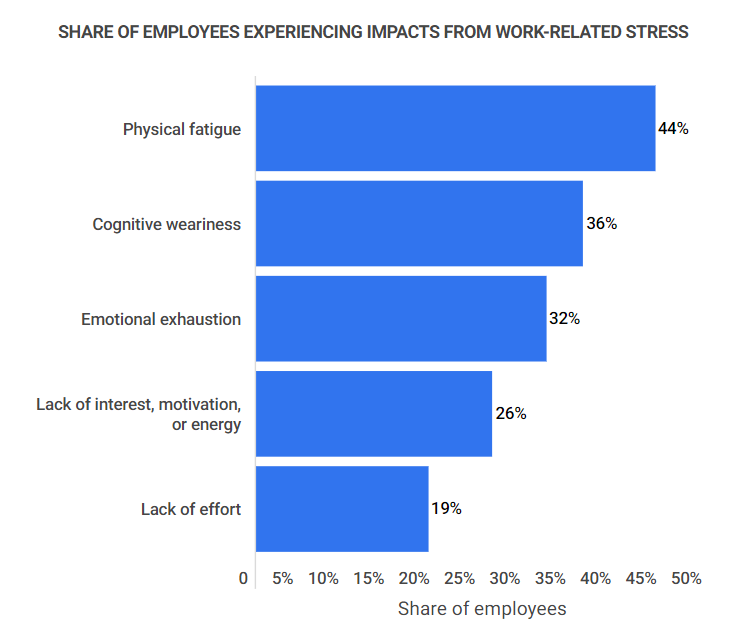
The American Psychological Association’s 2024 Work in America survey found that 67 percent of workers reported experiencing at least one outcome often associated with workplace burnout in the previous month, such as low energy, lack of motivation, loneliness, isolation, or reduced effort at work.
That does not mean every tired person is burned out. But it does suggest that many people are living closer to depletion than they realize.
What Stress and Burnout Can Actually Look Like
Burnout is not always obvious from the outside.
Some people keep showing up, answering emails, caring for children, meeting deadlines, and looking “fine.” Internally, they may feel flat, detached, resentful, anxious, foggy, or constantly on edge.
It can look like:
snapping at people you love
pulling away from friends
brain fog and forgetfulness
trouble sleeping, then functioning anyway
anxiety, dread, or panic
cynicism and loss of joy
feeling emotionally numb
headaches, stomach issues, body tension, or pain
mistakes you normally would not make
short temper at home, even if you look fine outside
This is why stress and burnout are easy to minimize. Many signs can be explained away one by one. You might say you are just busy, just tired, just in a hard season, or just waiting for things to calm down.
But when the signs start stacking together, the pattern matters.

Why People Keep Pushing
Burnout is not always caused by poor self-awareness. Often, people know they are struggling.
They keep pushing because they feel they have to.
There may be bills to pay, children to care for, clients depending on them, aging parents needing support, or a workplace culture where slowing down feels risky.
There can also be a deeper emotional pattern underneath it:
“I should be able to handle this.”
“Other people do more.”
“If I stop, everything will fall apart.”
“I’ll rest once I’m caught up.”
This kind of thinking is common, but it can become dangerous because the finish line keeps moving.
The question is not only, “Can I keep going?”
A better question is:
What is this pace doing to me?
The Body Keeps Score Before We Do
Stress is not just a thought pattern. It is physical.
The CDC and NIOSH describe job stress as harmful physical and emotional responses that can happen when job demands do not match a worker’s capabilities, resources, or needs.
Even outside the workplace, the same basic idea applies. When demands keep exceeding capacity, the body starts adapting to pressure as if pressure is the normal state.
That can affect sleep, digestion, muscle tension, energy, concentration, mood, appetite, pain, and immune functioning. The APA notes that chronic work stress can contribute to health concerns including depression, obesity, and heart disease.
This is not meant to scare people. It is meant to make the point clearly:
Burnout is not imaginary.
If your body is sending signals, those signals deserve attention.

Why “Just Rest” Often Does Not Fix Burnout
Rest matters.
Sleep matters. Time off matters. Slowing down matters.
But rest alone may not be enough if the same stress patterns restart immediately afterward.
A weekend off might help someone recover a little, but if they return to the same workload, the same lack of boundaries, the same emotional pressure, and the same habit of ignoring their needs, the relief may fade quickly.
This is where people often feel discouraged. They try to rest and still feel tired, so they assume they are doing something wrong.
But the issue may not be rest itself.
The issue may be that burnout recovery often requires more than a pause. It may require noticing patterns, changing expectations, learning regulation skills, practicing boundaries, reconnecting with personal needs, and building a more sustainable relationship with stress.
That takes time.
It also often takes support.
Burnout Can Affect Relationships
One of the hardest parts of burnout is that it often affects the people closest to us.
Many people can hold themselves together in public, at work, or around people they do not know well. Then they come home and have very little left.
That can show up as irritability, withdrawal, impatience, emotional distance, or conflict over small things.
This does not mean someone does not care about their family or relationships. It may mean their capacity has been drained for too long.
Burnout can narrow a person’s emotional range. The things that usually help someone feel connected, playful, affectionate, or patient may become harder to access.
This can create shame, especially for parents, caregivers, and people who are used to being the reliable one.
But shame rarely helps burnout improve.
Curiosity is more useful.
Instead of asking, “What is wrong with me?” it may help to ask, “What has been taking more from me than I can recover from?”

Burnout and Self-Compassion
Self-compassion can sound soft, but in burnout recovery it is practical.
People who are burned out often have a harsh inner voice. They criticize themselves for being tired, distracted, irritable, emotional, unmotivated, or less productive than usual.
But constantly attacking yourself for being depleted usually makes recovery harder.
Self-compassion does not mean avoiding responsibility. It means recognizing that your limits are real and that your needs matter too.
It may sound like:
“I am not lazy; I am overloaded.”
“I need support, not more self-criticism.”
“This pace is not sustainable.”
“I can take this seriously before I collapse.”
That shift matters because burnout recovery often begins when a person stops treating their own exhaustion like a character flaw.
What Actually Helps With Stress and Burnout
There is no single solution for burnout, because burnout is rarely caused by one thing.
But there are patterns that tend to help.
People often need to:
identify what is draining them repeatedly
notice how stress shows up in the body
practice emotional regulation before overwhelm peaks
reduce unnecessary pressure where possible
reconnect with personal needs and values
build boundaries that are realistic, not performative
talk honestly instead of minimizing everything
create recovery time that is actually restorative
For some people, therapy is part of this. For others, a group setting can be helpful because burnout often thrives in isolation.
The goal is not to create a perfect stress-free life. That is not realistic.
The goal is to build more awareness, more support, and more capacity to respond before stress takes over completely.
Why Support in Nature Can Be Different
Not everyone recovers well in the same environment where they became overwhelmed.
For some people, sitting indoors and talking about stress can help. For others, being outside creates a different kind of space.
Outdoor settings can make it easier to slow down, notice the body, and reconnect with the present moment. There is less pressure to perform. The environment itself can support grounding, reflection, and nervous system regulation.
This is not about pretending nature magically fixes burnout. It does not.
But being outdoors can create the conditions for people to step out of their usual stress loop long enough to notice what is happening.
Sometimes, that shift in environment matters.
Our Stress and Burnout Therapy Group
Our Stress and Burnout Therapy Group was created for adults who are dealing with ongoing stress, burnout, emotional exhaustion, mild to moderate anxiety, mild to moderate symptoms of depression, or difficulty slowing down and disconnecting from responsibilities.
The group combines psychological support with time outdoors, creating space to step away from daily demands and practice skills in a calmer, more grounded environment.
The focus is not on quick fixes.
The group is designed to support:
recognizing patterns of stress and burnout
practicing mindfulness and present-moment awareness
building emotional regulation skills
developing greater self-compassion
reconnecting with personal needs and wellbeing
learning strategies that can be used outside the group
connecting with others in a respectful and supportive setting
No previous experience with therapy, mindfulness, or outdoor programming is required.
This is a small therapeutic group, not a recreational nature program. Each session includes guided therapeutic activities, reflection, and practical skills that can be carried into daily life.

Who the Group May Be For
This group may be a good fit for adults aged 19 and older who are feeling worn down by stress and want a supported way to slow down, reflect, and begin practicing healthier coping strategies.
It may be especially relevant for people who notice:
emotional exhaustion
chronic stress or burnout
difficulty slowing down
mild to moderate anxiety
mild to moderate symptoms of depression
feeling disconnected from responsibilities, relationships, or themselves
a desire to improve emotional regulation and overall wellbeing
Before registration is finalized, participants complete a brief intake and screening process. This helps ensure the group is appropriate for their needs, goals, current circumstances, safety considerations, and accessibility needs.
Participants should be comfortable spending approximately one hour outdoors and participating safely in light activities such as walking or standing. Mobility concerns or accommodations can be discussed during the intake process.

A Final Thought
Burnout is not weakness.
It is often the result of trying to function for too long without enough recovery, support, or room to notice what stress is doing.
Rest can help, but if stress keeps returning in the same patterns, it may be time to look deeper.
You do not need to wait until you completely fall apart before taking burnout seriously.
Sometimes the most important step is simply admitting:
“This is taking more from me than I realized.”
And from there, support can begin.


Comments